Christmas Puppy Designs Review
As a designer who spends more time staring at stitch density charts than sleeping, I don’t just buy embroidery files because they look cute on a screen. I buy them because they translate well to thread, hold up to wear, and actually sell in a crowded marketplace. When Christmas Puppy Designs landed in my inbox, I didn’t immediately think about holiday sales. I thought about the practicalities of production: How will this render on a cotton canvas tote? Will the puppy’s features get lost in a dense fill stitch on a dark sweatshirt? Is this going to be a headache for small business owners trying to create consistent, high-quality merchandise?
After putting this machine embroidery design through its paces—testing it on various fabrics, checking the layout for different product types, and imagining how a customer would receive the final item—I have some honest thoughts. This isn’t just another generic clipart file; it has a distinct personality that requires careful handling to shine.
First Impressions and Visual Personality
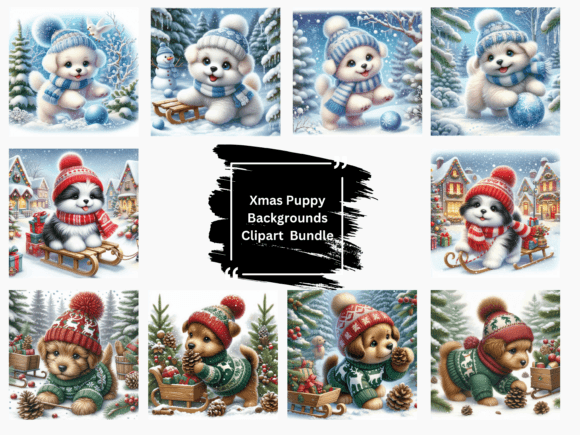
The immediate draw of these Illustrations is their warmth. In a sea of rigid geometric patterns or overly complex traditional motifs, Christmas Puppy Designs offers a soft, approachable aesthetic. The visual personality is playful yet cozy, which is exactly what buyers are looking for during the holiday season. It feels less like a mass-produced graphic and more like a hand-drawn sketch that has been digitized with care.
From a design perspective, the composition strikes a good balance between negative space and detail. It doesn’t scream for attention with overwhelming color blocks but rather invites the viewer in with gentle curves and recognizable shapes. This makes it incredibly versatile. It works as a standalone focal point on a large garment, but it also has enough clarity to function as a smaller accent on accessories. For an Etsy seller or a small shop product creator, this versatility is gold. You aren’t limited to one type of item; you can adapt this embroidery project to fit your brand’s voice without forcing it into a square peg.
Real-World Application: From Screen to Stitch
Let’s talk about where this design truly shines. I recently mocked up a custom embroidered tote bag using this file, and the results were promising. The lines remained crisp even when scaled down slightly, which is crucial for items that are carried around and subjected to friction. However, the magic really happens with personalized gifts. Imagine a baby blanket or a nursery decor piece featuring this motif. The softness of the design translates beautifully into thread colors that mimic pastel yarns or soft cotton blends.
For custom apparel, such as sweatshirts or t-shirts, this design offers a great opportunity for branding. It’s not so busy that it clashes with other elements, allowing you to add monograms or small text nearby without creating visual clutter. I also tested it as an embroidered patch intended for denim jackets. The clean edges held up well against the rugged texture of denim, proving that it can bridge the gap between delicate holiday aesthetics and durable everyday wear.
Furthermore, this digital embroidery file fits perfectly into the current trend of "cozy minimalism." Customers are moving away from loud, chaotic holiday themes toward items that feel intimate and heartfelt. A handmade product featuring Christmas Puppy Designs taps into that emotional connection. It suggests care, attention to detail, and a personal touch that machine-made goods often lack. When a buyer sees this on a tea towel or a pillow cover, they aren’t just buying kitchen linens; they are buying a feeling of home.
Where to Exercise Caution
No design is perfect for every surface, and being upfront about limitations builds trust with your customers. While Christmas Puppy Designs is robust, there are specific scenarios where you need to slow down and double-check your setup.
First, avoid placing this on highly textured fabrics like heavy bouclé wool or thick sherpa fleece unless you are using a significant amount of stabilizer. The fabric’s own texture can compete with the stitch definition, making the puppy’s features look muddy. Similarly, on thin or stretchy fabrics, the tension might cause puckering if you haven’t stabilized properly. Always test on scrap fabric first.
Another area to watch is small hoop sizes. If you attempt to digitize or embroider this in a very tight space, the finer details—like the eyes or tiny decorative accents—might merge together. Dense stitch areas require enough room to breathe. If you are working with a curved surface like a cap brim, keep in mind that the curvature can distort the aspect ratio. It’s better to center the design carefully or adjust the digitization slightly to account for the curve.
Also, consider the background. On dark fabric, ensure you have chosen high-contrast thread colors. The charm of this design relies on its clarity; if the threads blend too much with a navy or black background, the visual appeal drops significantly. Use proper stabilizer to prevent shifting, especially if you plan to wash the finished product frequently. Frequent washing can loosen stitches if the density isn’t optimal, so check whether the design holds up after a few cycles before committing to a large run.
Practical Notes for Designers and Sellers
If you are integrating this into your workflow, here are some essential tips to ensure success:
- Test Before You Sell: Never assume a file will work perfectly out of the box. Run a test stitch on the actual fabric you intend to use. Check for thread breaks, tension issues, and alignment problems.
- Review Stitch Density: Look closely at the fill stitch areas. Are they too dense, causing bulk? Are the satin stitches smooth, or do they show gaps? Adjusting the underlay or stitch length can make a huge difference in the final quality.
- Check Contrast: View your mockup in black and white. If the design loses its shape or readability without color, it might struggle in real life. This helps you select the best thread colors for maximum impact.
- Confirm Licensing: Before listing this as a commercial embroidery item or selling digital assets, verify the license terms. Some files are for personal use only, while others allow commercial sales of finished products. Protect your craft business by staying compliant.
- Stabilizer Selection: Match your stabilizer to your fabric weight. A light tear-away might not be enough for a heavy hoodie, while a cut-away could leave residue on delicate baby clothes.
Final Verdict
Christmas Puppy Designs is a solid addition to any designer’s library, particularly for those focusing on holiday-themed merchandise. It balances aesthetic appeal with technical feasibility, making it suitable for a wide range of applications—from tote bag design to baby embroidery. It supports brand consistency by offering a recognizable, friendly style that resonates with modern consumers.
However, success depends on execution. Treat it with respect, test it thoroughly, and choose your materials wisely. When done right, this design can elevate a simple finished product into a cherished keepsake. For creative entrepreneurs looking to expand their design assets with something both seasonal and timeless, this is a worthy investment. Just remember: the screen is not the hoop. Trust your instincts, inspect the details, and let the craftsmanship speak for itself.