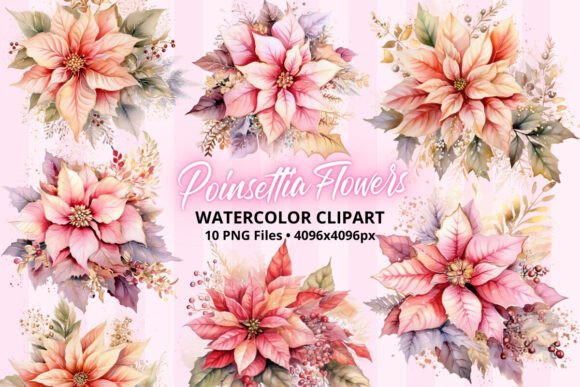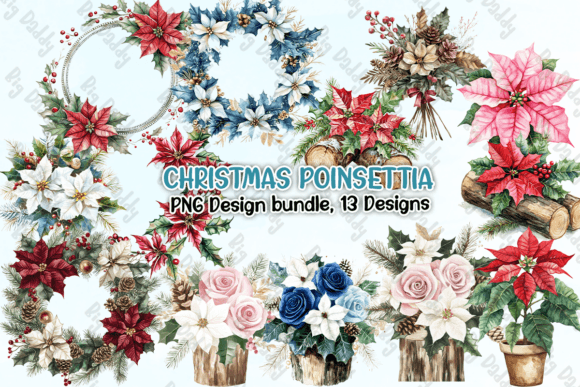
Christmas Poinsettia Clipart PNG
As a designer who spends more time than I care to admit staring at stitch charts and testing thread tension, I have learned that the difference between a good handmade product and a great one often comes down to the source file. It is not just about whether the machine can read the code; it is about how the design translates from a digital screen into physical texture. When I pulled up Christmas Poinsettia Clipart PNG for evaluation, my first instinct was to look past the festive cheer and assess its structural viability for real-world embroidery projects. This is not merely a pretty picture; it is a potential asset for your craft business, and like any asset, it needs to be scrutinized before it hits the hoop.
First Impressions: Mood and Visual Personality
The immediate takeaway from this illustration is its strong seasonal identity. Poinsettias are the quintessential symbol of winter holidays, and this clipart captures that essence without feeling cluttered. The visual personality leans toward classic and elegant rather than cartoonish or overly intricate. For an embroidery designer, this clarity is a relief. In a market saturated with busy, over-stitched designs that lose definition when reduced in size, there is something refreshing about a motif that relies on clean shapes and recognizable forms.
The mood it creates is warm and inviting, making it highly suitable for gift-oriented products. Whether you are creating personalized gifts for clients or stocking items for a holiday craft fair, this design naturally evokes feelings of comfort and tradition. It does not scream for attention with chaotic patterns; instead, it offers a focal point that allows other elements—like monograms or subtle background textures—to coexist without competing for the eye. This balance is crucial for boutique branding, where consistency and professionalism matter as much as creativity.
Real-World Application: Where This Design Shines
I evaluated this design with a specific scenario in mind: producing a line of custom holiday merchandise for a small online shop. The versatility of this machine embroidery design becomes apparent when you consider the range of products it can enhance. It is not limited to a single category but performs well across various mediums.
- Custom Apparel: On sweatshirts or t-shirts, this design works beautifully as a chest placement or a centered back print. The bold nature of the poinsettia holds up well against the heavier fabric weight, ensuring the image remains crisp even after multiple washes. It adds a touch of festive flair to everyday wear without being overwhelming.
- Tote Bags and Aprons: For canvas or cotton blends, this tote bag design provides a striking contrast. The natural fibers accept thread well, allowing the colors to pop. Imagine a beige canvas tote with a vibrant red and green poinsettia embroidered on the front—it is practical, stylish, and perfect for holiday gifting.
- Baby Items and Nursery Decor: While poinsettias are traditional, softer colorways can make this baby embroidery project feel gentle and appropriate for a nursery wall hanging or a christening gown accent. The clean lines ensure that even if the stitching is slightly imperfect, the overall shape remains recognizable.
- Holiday Gifts and Kitchen Towels: Tea towels and kitchen linens are high-volume sellers during the holidays. This design fits perfectly within standard hoop sizes, making it efficient for batch production. It transforms a simple household item into a keepsake, increasing the perceived value of the finished product.
Technical Considerations and Potential Pitfalls
No design is flawless, and understanding where a file might struggle is just as important as knowing where it excels. As an experienced reviewer, I must highlight several areas where caution is required when working with this embroidery file.
One significant concern is the handling of small details. If the original illustration contains fine lines or tiny text, these elements may not translate well through smaller hoop sizes. Embroidery machines have limitations regarding minimum stitch length and spacing. Attempting to stitch intricate corners or delicate leaves in a tight space can result in thread breaks, puckering, or loss of definition. Therefore, it is essential to inspect the design closely and potentially simplify certain elements if you plan to use it on smaller items like caps or hats.
Fabric choice also plays a critical role. Textured fabrics, such as heavy wools or loose-weave knits, can obscure the finer details of the design. Similarly, stretchy fabrics require proper stabilization to prevent distortion. Without adequate support, the stitch density of the design could pull the fabric out of shape, ruining the symmetry of the poinsettia. Always test on scrap fabric that matches the final product’s weight and stretch characteristics.
Additionally, dark fabrics present their own challenges. If the design relies on light-colored threads for highlights, they may get lost against a black or navy background. Conversely, using white thread on dark fabric requires careful underlay settings to prevent transparency. Testing in black and white mockups can help you visualize how the contrast will hold up in reality.
Practical Designer Notes for Success
To ensure the best results, follow these practical steps before committing to a full production run:
- Test on Scrap Fabric: Never assume a design will work perfectly on your final material. Run a test stitch-out to check for tension issues, thread breaks, or alignment problems.
- Check Thread Color Contrast: Ensure that the chosen thread colors provide enough contrast against the fabric. High contrast enhances visibility and makes the design pop.
- Review Stitch Density: Evaluate the density of the fill stitches. Too dense, and the fabric may pucker; too sparse, and the stabilizer might show through.
- Confirm Hoop Size: Verify that the design dimensions fit comfortably within your intended hoop size, leaving room for any necessary lettering or additional accents.
- Inspect Small Details: Zoom in on the digital file to identify any areas that might become muddy or indistinct when stitched.
- Use Proper Stabilizer: Select a stabilizer that complements the fabric type. Cut-away stabilizers are generally recommended for stretchy or heavy fabrics, while tear-away may suffice for stable wovens.
- Verify Licensing: Before selling finished items or using this as part of a commercial digital embroidery file package, confirm the licensing terms. Some illustrations allow personal use only, while others permit commercial sales of the finished goods.
Impact on Brand and Customer Perception
In the world of craft business and Etsy seller operations, presentation is everything. A well-executed embroidery project signals quality and attention to detail. When customers receive a handmade product that looks professional and polished, it builds trust and encourages repeat purchases. Using a high-quality source file like Christmas Poinsettia Clipart PNG contributes to this perception.
The design’s clear aesthetic helps maintain brand consistency. If your shop specializes in cozy, traditional holiday decor, this motif aligns perfectly with that theme. It also enhances giftability; a beautifully embroidered poinsettia on a pillow cover or apron feels more thoughtful and premium than a printed alternative. This emotional connection drives buyer engagement and can lead to positive reviews and word-of-mouth referrals.
Furthermore, the design’s adaptability allows for creative variations. You can combine it with satin stitch borders, running stitch accents, or complementary motifs like holly or snowflakes to create unique design assets. This flexibility ensures that your offerings remain fresh and distinctive in a crowded marketplace.
Final Verdict
After thorough evaluation, Christmas Poinsettia Clipart PNG emerges as a reliable and versatile tool for embroidery designers. Its strong visual identity, combined with its suitability for a wide range of products, makes it a valuable addition to any design library. However, success depends on proper execution. By paying attention to fabric choice, stitch density, and licensing requirements, you can transform this illustration into a stunning finished product that delights customers and elevates your brand.
For those looking to capitalize on the holiday season, this design offers a solid foundation. It balances aesthetic appeal with technical feasibility, provided that the necessary precautions are taken. Whether you are a seasoned pro or a hobbyist looking to expand your skills, this embroidery project is worth considering. Just remember to test thoroughly, choose materials wisely, and always prioritize quality in every stitch.